A car in Connecticut lives through four distinct kinds of mess a year. None of them is dramatic on its own. What does the damage is leaving each one in place until the next arrives. Here is a simple way to think about the year.
Winter: salt and brine
Road crews treat Connecticut roads with salt and liquid brine before and during winter storms. It keeps the roads passable, and it coats the underside of every car that drives on them. Salt holds moisture against metal and speeds up rust, especially in seams, wheel arches and along the bottom edges of doors.
- Rinse the car after storms once the roads have dried, paying attention to the wheel arches and the underside. A quick rinse on a mild day beats waiting for spring.
- Go into winter with a coat of wax or sealant on the paint. It makes salt film far easier to rinse away.
- Inside, rubber mats catch the slush. Shake them out; salt stains set into carpet if they are left to dry and re-wet all season.
Early spring: the big clean
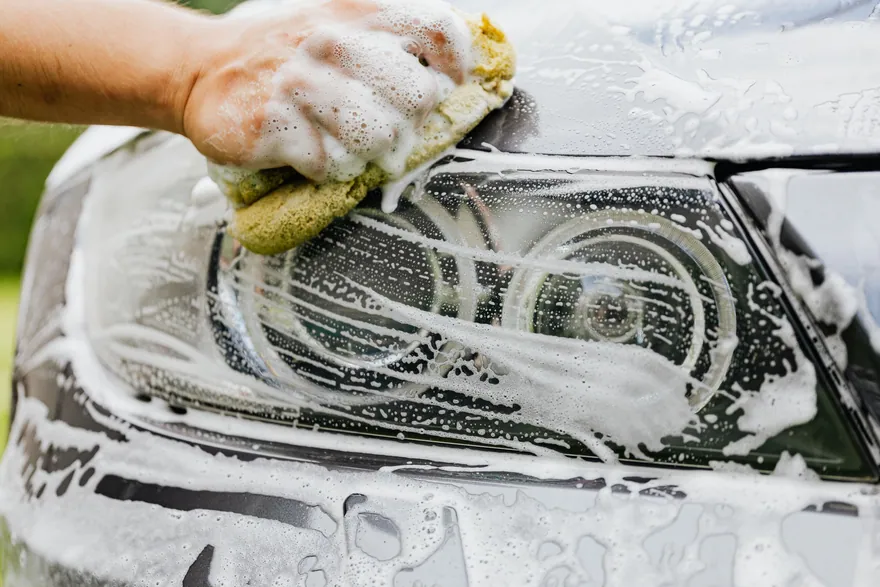
When the street sweepers come out, it is time to get winter off the car properly. This is the one time of year a full detail does the most good: a thorough wash including the door jambs and the underside, the white salt lines shampooed out of the carpets, and fresh protection on the paint before the sun gets strong.
It is also a good moment to look at the headlights. Lenses that have gone yellow and cloudy can usually be restored, and it makes a real difference to night driving.
Late spring: pollen and sap
For a few weeks, everything in Connecticut turns yellow-green. Pollen is fine and slightly sticky, and with dew or light rain it forms a film that is surprisingly stubborn. Trees bring sap and birds bring their own contribution, both of which can mark paint if they bake on in the sun.
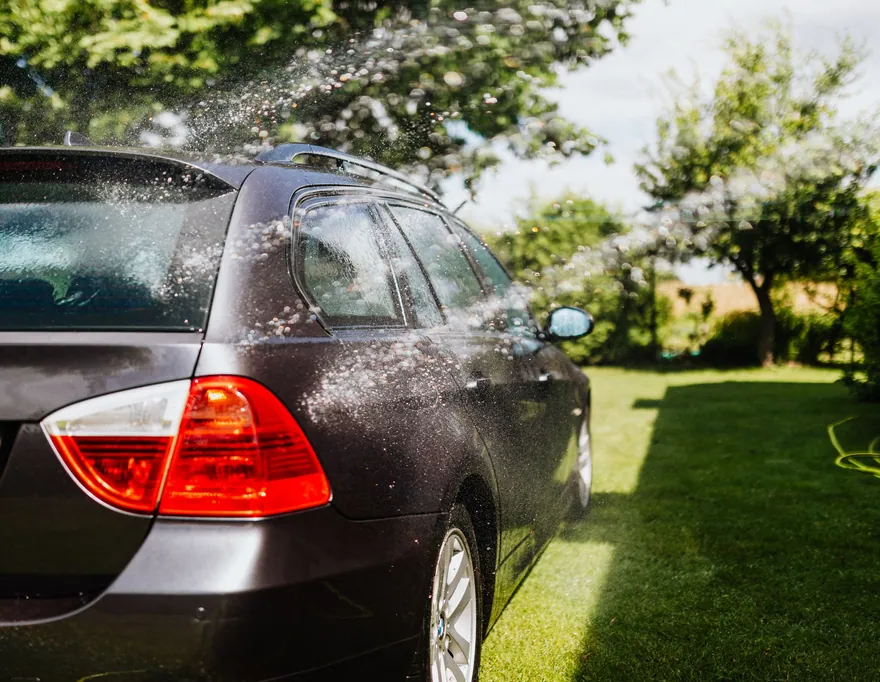
- Rinse pollen off with plenty of water before touching the paint. Wiping a dry, dusty car with a cloth drags grit across it.
- Deal with sap and bird droppings promptly. Soak them, do not scrape them.
- Pollen gets inside too. If the cabin smells musty when the fan comes on, ask about the cabin filter at your next service, and have the vents and dashboard cleaned.
Summer: sand, sun and the shoreline
From Greenwich to Stonington, summer means the beach, and the beach comes home in the carpet. Sand works down into the pile and acts like sandpaper underfoot. Towns along Long Island Sound also get salt in the air, which leaves a film on glass and paint.
- Vacuum sand out sooner, not later. A stiff brush to lift it from the carpet first makes the vacuum far more effective.
- Wet dogs and damp towels are where interior odors start. Air the car out, and treat a smell early, before it settles into the seat foam.
- Sun fades and dries interior plastics and leather. A sunshade and an occasional conditioner go a long way.
- Wash more often if you park near the water.
Fall: leaves, and getting ready
Fallen leaves look harmless, but wet leaves left on paint can leave stains, and leaves packed into the channels below the windshield and around the trunk lid block the drains that carry rainwater away. Clear them by hand.
Late fall is the second good moment in the year for a proper detail. The aim is different from spring: get the paint clean and protected before the first salt goes down, and get the interior dry and clean before a season of closed windows.
The short version
- Two real details a year, early spring and late fall, do most of the work.
- Rinse in between whenever salt, pollen or sea air has had a few weeks to build up.
- Do not let things sit: salt on metal, sap on paint, sand in carpet, damp in seats.
LocalMatch covers every town in the state. Find yours, or send a request and see what local detailers would charge.